
Choosing the best car amplifier for a full system means matching channel count, impedance, RMS power, and available installation space—not simply choosing the biggest wattage number.
This roundup compares 10 four-channel, monoblock, Class A/B, and Class D options so you can build a balanced system for speakers, subwoofers, or both.
Best 10 Car Amplifier for Full System Picks for 2026
Compact Power Pick

- Four-channel Class A/B design
- Variable crossover and adjustable gain
- Supports bridged output configurations
Best For: Custom systems needing compact, tunable four-channel power
OEM Upgrade Choice

- 800W RMS four-channel Class D output
- High-level inputs with auto turn-on
- HPF, LPF, full-range, and gain controls
Best For: Factory-stereo upgrades with flexible four-channel power
High-Efficiency Tuning Pick

- 130W x 4 RMS at 4 ohms
- HP, LP, and full-range modes
- Compact Class D aluminum chassis
Best For: Aftermarket systems needing flexible crossover and bridgeable power
Small-System Value Pick
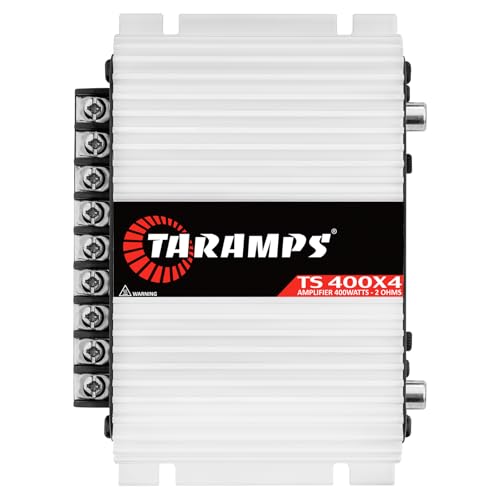
- 400W RMS four-channel output
- Two bridged channels
- Compact surface-mount design
Best For: Space-limited systems needing lightweight multichannel amplification
Budget Multi-Speaker Choice

- Four-channel Class A/B design
- Supports 2–8 ohm speakers
- Can run full-range speakers and a subwoofer
Best For: Moderate-power entry-level full-system builds
High-Power Bass Platform

- 3000W RMS mono output
- Works at 1, 2, or 4 ohms
- Adjustable filters, gain, and bass boost
Best For: High-output bass-focused systems with a separate speaker amp
Versatile Four-Channel Pick

- Four-channel Class-D output
- Adjustable crossover and bass EQ
- Compact chassis with four-way protection
Best For: Flexible speaker-focused full-system builds
Factory-Radio Ready Choice

- 1200 watts RMS total
- High-level inputs with auto turn-on
- HPF, LPF, and Full modes
Best For: High-output OEM-radio installations
High-Power Compact Option

- Up to 320 watts x 4 at 2 ohms
- Variable crossover and adjustable gain
- Compact Class-D custom-build design
Best For: High-output custom speaker systems
Compact Power Pick – DS18 SXE-1200.4/BK
If you need a car amplifier for full system use, the DS18 SXE-1200.4/BK offers four channels, adjustable gain, and a variable crossover for tailoring sound to your vehicle. Its compact Class A/B chassis fits custom installations while supporting multiple speaker configurations.
Best For: Custom car audio systems needing flexible four-channel power in a compact amplifier.
Pros:
- Provides 60W x 4 at 4 ohms, 100W x 4 at 2 ohms, or 200W x 2 bridged at 4 ohms.
- Variable crossover and adjustable input sensitivity support detailed system tuning.
- Compact aluminum chassis measures 9.81 x 5.51 x 1.89 inches.
Cons:
- Class A/B designs may be less power-efficient than comparable Class D amplifiers.
- The supplied notes do not specify high-level inputs for direct factory-stereo connection.
The SXE-1200.4/BK is a versatile choice when installation space and tuning control matter. Its bridgeable output also gives a full system builder room to adapt the amplifier to different speaker layouts.
OEM Upgrade Choice – Taramps TS 800X4
The Taramps TS 800X4 is a practical car amplifier for full system upgrades, especially when you want to retain a factory stereo. Its high-level inputs with automatic turn-on, four channels, and Class D efficiency simplify integration across a range of vehicles.
Best For: Factory-stereo upgrades and systems requiring strong four-channel output with flexible inputs.
Pros:
- Delivers 4 x 200W RMS at 2 ohms or 2 x 400W RMS bridged at 4 ohms.
- High-level inputs and automatic turn-on work with compatible OEM stereos.
- HPF, LPF, full-range, and gain controls enable speaker-by-speaker tuning.
- Compact 6.89 x 5.43 x 1.89-inch aluminum chassis weighs 1.9 pounds.
Cons:
- The listed power ratings are specified at 2 ohms or in bridged 4-ohm operation, so speaker compatibility should be checked.
- The supplied details do not list included wiring or installation accessories.
With its OEM-friendly connections and bridgeable four-channel layout, the TS 800X4 is well suited to upgrading factory systems without giving up control over crossover settings. Its compact Class D design also helps simplify placement.
High-Efficiency Tuning Pick – AUDISHAKO MHD130.4D
For a car amplifier for full system installations, the AUDISHAKO MHD130.4D combines four-channel power with selectable HP, LP, and full-range modes. Its Class D architecture, broad input sensitivity, and compact chassis make it adaptable to aftermarket head units, DSPs, and line output converters.
Best For: Aftermarket systems needing flexible crossover modes and efficient front-and-rear speaker power.
Pros:
- Produces 130W x 4 RMS at 4 ohms or 260W x 4 RMS at 2 ohms.
- Can deliver 520W x 2 RMS bridged at 4 ohms for compatible higher-power setups.
- Each channel pair supports HP, LP, or full-range operation with a 50–250Hz crossover.
- Compact aluminum chassis measures 8.66 x 4.33 x 1.97 inches.
Cons:
- RCA inputs are intended for compatible aftermarket sources, DSPs, or line output converters.
- The supplied notes do not specify high-level speaker inputs for factory-stereo integration.
The MHD130.4D stands out for system flexibility: it can run front and rear speakers or be configured in bridged pairs when the installation calls for more output. Confirm source connectivity and speaker impedance before installation.
Small-System Value Pick – Taramps TS 400×4
The Taramps TS 400×4 is a small four-channel option for a car amplifier for full system builds where installation space is limited. It provides 400 watts RMS overall and supports two bridged channels, making it suitable for compact multichannel layouts when paired with compatible equipment.
Best For: Space-conscious systems needing a lightweight four-channel amplifier with bridged-channel capability.
Pros:
- Four-channel design provides up to 400 watts RMS of listed output.
- Two channels can be bridged for compatible system configurations.
- Very compact surface-mount chassis measures 4.76 x 1.93 x 5.43 inches.
- Supports an operating supply range from 8 to 16 volts DC.
Cons:
- The supplied notes do not provide detailed per-channel RMS ratings or crossover specifications.
- Professional installation is strongly recommended for safe setup.
- RCA input is listed, but high-level factory-stereo input capability is not specified.
The TS 400×4 is best viewed as a compact, straightforward amplifier for installations where four channels and limited space are the priorities. Because control details are limited in the supplied information, verify system requirements before buying.
Compact Full-System Upgrade – Slim 4-Channel Amp
If you need a car amplifier for full system audio, the YaeCCC 4-channel model is designed to power multiple speakers while fitting into tight installation spaces. Its slim housing, four-channel output, and support for speakers and a subwoofer make it a practical choice for upgrading a factory system.
Best For: Drivers building a compact four-channel system with speakers and subwoofer support.
Pros:
- Four-channel design with 4 x 100W RMS output and 3200W peak power.
- Low-profile brushed aluminum housing is only 3 inches high.
- Supports 2–4 ohm loads, 20Hz–20kHz response, and speaker/subwoofer applications.
- Includes mounting hardware for installation.
Cons:
- The remote turn-on lead must be connected if the amp powers on without its indicator light.
- The supplied specifications emphasize peak power, so system matching should focus on the stated RMS output.
With its compact form factor and four channels, this YaeCCC amplifier is suited to a space-conscious full-system upgrade. Verify wiring, impedance, and remote-turn-on connections before installation.
Budget Multi-Speaker Choice – BOSS Riot 4-Channel Amp
The BOSS R1004 is a straightforward car amplifier for full system installations that need four channels in a compact chassis. Its Class A/B topology, full-range operation, and 2–8 ohm speaker compatibility make it suitable for powering a range of connected speakers.
Best For: Entry-level multi-speaker systems needing a small four-channel amplifier.
Pros:
- Four-channel output rated at 50W maximum per channel at 4 ohms and 100W maximum at 2 ohms.
- Class A/B topology and MOSFET power supply.
- Can run full-range speakers and a subwoofer when the system is wired and matched correctly.
- Compact 7.75 x 9 x 2-inch chassis with a stated six-year parts-and-labor warranty under qualifying purchase terms.
Cons:
- Its power ratings are lower than the other amplifiers in this roundup.
- System planning requires careful attention to impedance, polarity, and load calculations.
This BOSS model prioritizes simple four-channel expansion and a relatively compact installation footprint. It is a sensible fit when moderate output and broad speaker compatibility matter more than high-power bass delivery.
High-Power Bass Platform – Taramps HD 3000 Monoblock
The Taramps HD 3000 takes a different approach to a car amplifier for full system builds: it is a high-output mono amplifier for subwoofers, bass, mid-bass, midrange drivers, and tweeters. Its 1-ohm configuration and adjustable crossover controls make it a powerful foundation for systems that need substantial single-channel output.
Best For: High-output systems centered on a 1-ohm subwoofer or bass-focused load.
Pros:
- Delivers 3000W RMS from a mono full-range design.
- Operates with 1-, 2-, or 4-ohm loads for flexible system wiring.
- Includes variable high-pass and low-pass filters, gain adjustment, and bass boost.
- Accepts RCA input and supports an optional monitor-level remote.
Cons:
- As a monoblock, it does not provide separate channels for a complete set of front and rear speakers.
- Its stated 150A fuse requirement and 4 AWG positive/negative power cable call for substantial electrical-system planning.
- The listed warranty is one year.
The HD 3000 is best viewed as the high-power drive stage in a larger full-system build rather than an all-in-one speaker amplifier. Confirm the vehicle’s charging capacity, fuse protection, wiring, and speaker impedance before using its available output.
Versatile Four-Channel Pick – Recoil DI550.4
The Recoil DI550.4 is a practical car amplifier for full system builds that need four-channel flexibility in a compact chassis. It delivers 80 watts RMS per channel at 4 ohms, 130 watts at 2 ohms, or 260 watts x 2 when bridged, with gain, HPF, LPF, crossover, and bass EQ controls for system tuning.
Best For: Drivers building a flexible speaker-focused system with adjustable tuning and bridgeable channels.
Pros:
- Four-channel Class-D design with multiple power configurations
- Adjustable gain, HPF, LPF, crossover, and bass EQ
- Compact 7.48-by-5.90-by-1.77-inch chassis with efficient heatsinks
- Four-way protection circuitry and a one-year warranty
Cons:
- Its 1040-watt figure is maximum power rather than continuous RMS output
- Does not include stated factory-radio high-level input features
The DI550.4 stands out for control flexibility and easy installation in space-limited builds. Check the RMS ratings and available inputs against your speakers and source unit before buying.
Factory-Radio Ready Choice – Taramps TS 1200X4
The Taramps TS 1200X4 is a strong car amplifier for full system applications when you want high output and straightforward connection options. It produces 4 x 300 watts RMS at 2 ohms or 2 x 600 watts bridged at 4 ohms, and its high-level inputs with automatic turn-on can connect directly to many OEM stereos.
Best For: High-output systems using factory radios, speakers, subwoofers, tweeters, drivers, or component setups.
Pros:
- 1200 watts RMS total output in a four-channel Class-D design
- High-level inputs and automatic turn-on for OEM stereo integration
- HPF, LPF, and Full modes support system-specific tuning
- Bridgeable channels and reinforced terminals suit demanding builds
Cons:
- Professional installation is recommended
- Its listed 2-ohm and bridged configurations require careful system matching
Choose the TS 1200X4 if factory-radio compatibility and substantial RMS output are priorities. Confirm your speakers’ impedance and power handling before using the amplifier’s highest-output configurations.
High-Power Compact Option – DS18 SXE-3000.4D/RD
The DS18 SXE-3000.4D/RD is aimed at custom systems that need a powerful car amplifier for full system use without a traditionally large amplifier footprint. Its rated output is 200 watts x 4 at 4 ohms, 320 watts x 4 at 2 ohms, or 500 watts x 2 bridged at 4 ohms, with a variable crossover and adjustable input gain.
Best For: Custom builds seeking high four-channel output and flexible speaker-system tuning.
Pros:
- High rated output across 2-ohm, 4-ohm, and bridged configurations
- Variable crossover and adjustable gain input sensitivity
- Class-D construction supports a compact custom-installation format
- Aluminum construction and a listed 4.1-pound weight
Cons:
- The product’s 3000-watt figure is maximum output, not the listed four-channel RMS rating
- Its high power levels make speaker matching and installation especially important
- The supplied notes do not specify high-level inputs or a warranty
The SXE-3000.4D/RD is the performance-oriented option of this group, particularly for custom builds with speakers that can handle its output. Verify impedance, power handling, wiring, and available installation space before purchase.
How We Picked the Best Car Amplifier for Full System
We focused on amplifiers that can serve a meaningful role in a complete car audio setup, evaluating channel configuration, stated RMS output, impedance support, amplifier class, crossover flexibility, connection options, and installation practicality. Four-channel models are especially versatile because they can power front and rear speakers or run bridged channels for additional output. The Taramps HD 3000, by contrast, is a monoblock option intended primarily for subwoofer duty and should be paired with a separate full-range amplifier when building a complete system.
Because published maximum wattage can be misleading, compare RMS output at the impedance your speakers or subwoofer actually uses. Also verify fuse requirements, wiring recommendations, dimensions, and cooling clearance before purchase.
Quick Comparison
| Best For | Recommended Type | What to Prioritize |
|---|---|---|
| Factory speaker upgrade | Compact four-channel amp | Clean RMS power and easy inputs |
| Front and rear speakers | Four-channel full-range amp | Matching output across all channels |
| Speakers plus a subwoofer | Four-channel amp with bridging | Flexible crossover and impedance compatibility |
| High-output subwoofer system | Monoblock amplifier | Subwoofer impedance and RMS capability |
Key Buying Factors for a Car Amplifier for Full System
Channel Layout and System Plan
A four-channel amplifier is the most adaptable choice for many full systems. It can power four speakers independently, or you can bridge two channels for a subwoofer while using the remaining channels for front speakers. Confirm that the model supports the bridged load your subwoofer requires.
RMS Power and Impedance
Use continuous RMS ratings rather than peak or maximum wattage when matching equipment. An amplifier should deliver appropriate power at the speaker’s nominal impedance, commonly 2 or 4 ohms. Too little power can limit performance, while an incorrect load may cause overheating or protection shutdowns.
Class, Size, and Heat
Class D amplifiers generally offer strong efficiency and compact installation, making them useful in tight spaces. Class A/B designs can also perform well but may require more ventilation. Leave clearance around the amplifier and follow the manufacturer’s mounting guidance.
Inputs, Crossovers, and Wiring
RCA inputs are convenient with an aftermarket receiver, while speaker-level inputs help integrate with many factory stereos. Adjustable high-pass and low-pass filters simplify tuning. Plan for suitable power and ground cables, an in-line fuse near the battery, secure signal wiring, and adequate vehicle charging capacity.
Who Should Buy Which Car Amplifier for Full System?
Choose a compact four-channel model for a straightforward factory-speaker upgrade or limited installation space. Select a higher-output four-channel Class D amplifier when you want stronger headroom, multiple speakers, or bridged subwoofer capability. A lower-powered four-channel option can be a sensible match for efficient speakers and modest systems. Choose a monoblock such as the Taramps HD 3000 only when your priority is driving a demanding subwoofer; it is not a replacement for a full-range speaker amplifier. Finally, confirm every rating and wiring requirement against the manufacturer’s current specifications before installing.