
The best compact MIDI interfaces make it easier to connect keyboards, controllers, synths, and computers without sacrificing valuable desk space. The right choice depends on your connection needs, MIDI routing, portability, and whether you also need audio inputs and outputs.
We compared 10 compact options, including USB MIDI hosts, multi-port MIDI interfaces, keyboard controllers, pad controllers, and audio interfaces with MIDI connectivity. Use the guide below to narrow the list by setup type and budget.
Best 10 Compact Midi Interfaces Picks for 2026
Most Versatile
CME H2MIDI Pro USB Host Interface

- Standalone USB host connects modern gear to 5-pin DIN MIDI
- Supports up to eight USB MIDI devices with a hub
- Advanced routing, filtering, mapping, and presets
Best For: Hybrid MIDI rigs and complex performance setups
Best Compact Keyboard
Korg nanoKEY2 25-Key MIDI Controller

- Slim 25-key USB-MIDI keyboard
- Velocity-sensitive keys support expressive input
- Sustain button helps with piano parts
Best For: Laptop-based production and portable note entry
Best for Recording
Focusrite Scarlett Solo 3rd Gen

- One XLR mic preamp and one Hi-Z instrument input
- Supports recording up to 24-bit/192kHz
- Includes software and headphone monitoring
Best For: Compact vocal, guitar, and podcast recording
Best Dedicated MIDI Hub

- Standalone 3-in/3-out MIDI routing
- Supports merge, split, thru, and filtering
- Handles clock, sysex, MTC, MPE, and controllers
Best For: Hardware synth and multi-device MIDI systems
Portable Key Control
M-Audio Keystation Mini 32 MK3

- 32 velocity-sensitive mini keys
- USB plug-and-play for Mac and Windows
- MPC Beats and Melodics access included
Best For: Laptop producers who prefer a compact piano-style keyboard
Advanced MIDI Routing

- Standalone USB host for MIDI hardware
- Advanced split, merge, map, and filter tools
- USB-C, 5-pin MIDI, and optional WIDI support
Best For: Hardware-focused performers and complex compact MIDI rigs
Portable Beat Production

- Eight RGB-backlit MPC drum pads
- Eight assignable Q-Link knobs
- Four programmable mapping presets
Best For: Mobile beat makers who need pads and DAW control
Best All-in-One Pick
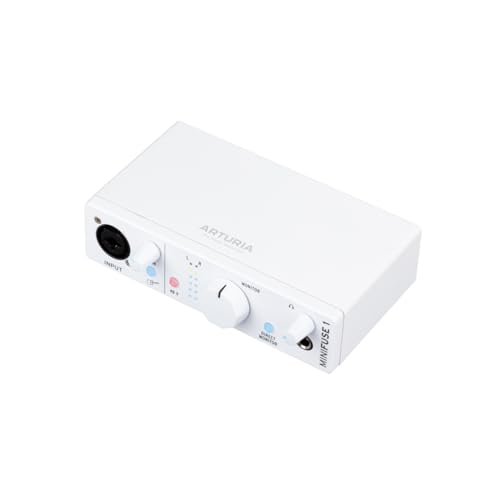
- 5-pin MIDI input and output with USB connectivity
- Audio input with phantom power and Loopback
- 5-year warranty plus extensive bundled software
Best For: Small studios needing audio recording and MIDI in one interface
Best Compact Keyboard Controller

- 25 velocity-sensitive mini keys in a portable design
- Programmable controls, arpeggiator, sustain, and tap tempo
- Includes 40 teaching courses and broad DAW compatibility
Best For: Beginners who need a small USB MIDI keyboard
Best for MIDI Host Connectivity
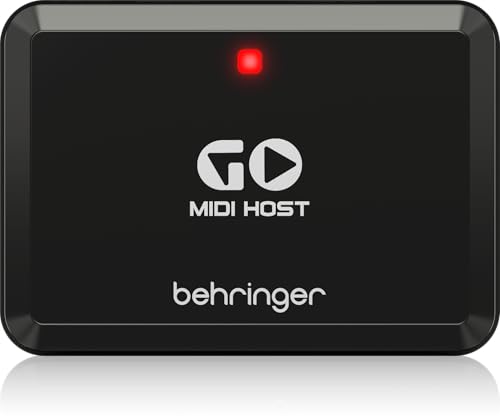
- Compact MIDI/USB host interface
- Designed for plug-and-play keyboard connectivity
- 192 kHz maximum sample rate listed
Best For: Keyboard users needing a dedicated MIDI/USB host connection
Most Versatile – CME H2MIDI Pro USB Host Interface
The CME H2MIDI Pro is one of the most flexible compact midi interfaces for connecting modern USB MIDI gear with traditional 5-pin DIN hardware. It can operate standalone, work with a computer over USB-C, and handle routing, filtering, mapping, and preset switching through HxMIDI Tools.
Best For: Hybrid MIDI setups, performers, producers, and guitarists combining USB and legacy MIDI equipment.
Pros:
- Connects USB class-compliant MIDI devices to 5-pin DIN hardware without a computer.
- Supports up to eight USB MIDI devices through a standard hub.
- Offers routing, filtering, mapping, splitting, and up to four saved presets.
- Works with macOS, Windows, iOS, Android, Linux, and ChromeOS.
Cons:
- Advanced configuration depends on HxMIDI Tools software.
- It provides MIDI connectivity rather than audio inputs or outputs.
Choose the H2MIDI Pro when flexibility matters more than a simple plug-and-play connection. Its small footprint and dual operating modes make it especially useful for complex hybrid rigs.
Best Compact Keyboard – Korg nanoKEY2 25-Key MIDI Controller
The Korg nanoKEY2 is a slim 25-key USB controller for shoppers who want a compact midi interface-style setup centered on laptop-based playing and sequencing. Its low-profile design, velocity-sensitive keys, and sustain button make it suited to entering parts without taking much desk space.
Best For: Mobile producers, laptop musicians, and beginners who need a small USB keyboard controller.
Pros:
- Low-profile 25-key design is easy to place beside a laptop.
- Velocity-sensitive keys provide more expressive input than basic computer keys.
- Includes a sustain button for entering piano parts.
- USB connectivity keeps the setup simple.
Cons:
- It is a keyboard controller, not a standalone DIN MIDI interface.
- The 25-key range is limited for two-handed performances.
- The supplied notes list laptop compatibility but do not specify broad modern OS support.
The nanoKEY2 is a practical choice when portability and a minimal footprint are priorities. Consider it for note entry and basic control rather than for connecting multiple external MIDI devices.
Best for Recording – Focusrite Scarlett Solo 3rd Gen
The Focusrite Scarlett Solo 3rd Gen is an audio interface rather than a traditional MIDI interface, but its compact format makes it relevant for buyers comparing small music-production interfaces. It combines an XLR microphone preamp, a Hi-Z instrument input, headphone monitoring, and balanced outputs for recording and playback.
Best For: Solo vocalists, guitarists, podcasters, and home recordists who need compact audio connectivity.
Pros:
- Includes one XLR mic preamp and one Hi-Z instrument input.
- Records at up to 24-bit/192kHz.
- Air mode can add clarity to acoustic instruments.
- Includes recording software and the Hitmaker Expansion bundle.
Cons:
- It does not provide MIDI I/O.
- Its two-input layout is intended for small recording setups.
- USB connectivity is for audio rather than MIDI device hosting.
If your priority is recording vocals or guitar, the Scarlett Solo is the more appropriate compact interface in this group. MIDI-focused buyers should look instead for dedicated DIN or USB MIDI connections.
Best Dedicated MIDI Hub – CME U6MIDI Pro MIDI Interface
The CME U6MIDI Pro is a dedicated compact midi interface for hardware-focused setups. Its 3-in/3-out MIDI design supports standalone routing, merge, split, thru, and filtering, while USB-C provides plug-and-play computer connectivity across major operating systems.
Best For: Hardware synths, digital pianos, drum machines, and computer-based MIDI routing.
Pros:
- Provides standalone 3-in/3-out MIDI operation.
- Supports merge, split, thru, routing, and filtering.
- Handles notes, controllers, clock, sysex, MIDI timecode, and MPE.
- Compatible with macOS, iOS, Windows, Android, Linux, and ChromeOS.
Cons:
- It offers MIDI only, with no audio inputs or outputs.
- Advanced configuration requires UxMIDI Tools software.
- Its 5-pin DIN connections may require adapters for USB-only MIDI devices.
The U6MIDI Pro is a strong fit for musicians who need dependable hardware MIDI routing without making a computer the center of the setup. Its three inputs and outputs provide more connectivity than a basic one-port adapter.
Portable Key Control – M-Audio Keystation Mini 32 MK3
The M-Audio Keystation Mini 32 MK3 is a practical choice for shoppers comparing compact midi interfaces with a piano-style playing surface. Its 32 velocity-sensitive mini keys, USB plug-and-play setup, and lightweight design suit laptop-based production at home, in the studio, or on the go.
Best For: Producers and keyboard players who want a portable controller for melodies, chords, beat making, and basic expressive performance.
Pros:
- 32 velocity-sensitive mini keys provide more range than smaller pad-style controllers.
- USB connection works with Mac and Windows computers without drivers or external power.
- Includes MPC Beats software and access to 60 Melodics lessons.
- Pitch bend, modulation, octave, volume, and sustain controls add useful hands-on expression.
Cons:
- Mini keys may feel cramped for players accustomed to full-size keyboards.
- It is a MIDI controller only, not a standalone instrument with built-in sounds.
Choose this model when playable keys matter more than drum pads or extensive routing. Its simple USB operation and bundled software make it an accessible compact setup for computer-based music production.
Advanced MIDI Routing – CME H4MIDI WC
The CME H4MIDI WC stands out among compact midi interfaces for users who need routing flexibility in a small enclosure. It can connect USB MIDI gear directly to MIDI hardware without a computer, while also supporting computer, mobile, and tablet workflows through USB-C.
Best For: Guitarists, producers, and live performers building compact pedalboard, hardware synth, or multi-device MIDI setups.
Pros:
- Standalone USB host mode supports up to eight USB MIDI device ports through a standard hub.
- Offers MIDI thru, split, merge, mapper, and filter functions through HxMIDI Tools.
- Works across MacOS, Windows, iOS, Android, Linux, and ChromeOS.
- Supports USB or 9V DC standalone power and stores four preset configurations.
Cons:
- Optional WIDI Bluetooth MIDI requires the separately available WIDI Core module.
- Its advanced routing features may be more than needed for a basic one-controller setup.
This is the most capable option here for connecting and managing multiple MIDI devices. It makes particular sense when computer-free operation, preset recall, or custom signal routing is more important than having built-in keys or pads.
Portable Beat Production – Akai Professional LPD8
The Akai Professional LPD8 is a compact midi interface for beat makers who want tactile sample triggering and software control without carrying a full-size controller. Its eight RGB-backlit MPC-style pads, eight assignable knobs, and slim USB-powered design fit easily beside a laptop or into a production bag.
Best For: Producers, DJs, and musicians who need portable drum pads and hands-on DAW or plugin control.
Pros:
- Eight responsive RGB-backlit pads support samples, loops, and virtual instruments.
- Eight assignable Q-Link knobs provide tactile parameter and mixing control.
- Four programmable presets allow quick recall of different mappings.
- USB plug-and-play operation works with Mac and PC without an AC adapter.
Cons:
- Eight pads and no piano-style keys make it less suitable for melodic keyboard performance.
- USB connectivity is geared toward computer-based use rather than standalone operation.
Select the LPD8 if rhythm programming and hands-on software control are your priorities. Its small footprint and programmable controls make it a useful travel companion, though keyboard players may prefer the Keystation Mini 32.
Best All-in-One Pick – Arturia MiniFuse 1
The Arturia MiniFuse 1 is a strong choice among compact midi interfaces for recording vocals, guitar, synths, and other sources in a portable setup. It combines USB connectivity, 5-pin MIDI input and output, balanced line outputs, headphone monitoring, phantom power, and beginner-friendly software in a compact enclosure.
Best For: Home producers, vocalists, guitarists, and creators who want audio recording plus MIDI connectivity in one small interface.
Pros:
- Includes 5-pin MIDI input and output for synths, controllers, and drum machines.
- Offers a combo mic/instrument/line input with 48V phantom power, balanced outputs, and headphone volume control.
- Supports sample rates up to 192 kHz and includes Loopback for capturing voice alongside app or game audio.
- Backed by a 5-year warranty and bundled with Ableton Live Lite, Analog Lab Intro, Arturia FX, and other software.
Cons:
- Provides one main input channel, so it is less suited to recording multiple sources simultaneously.
- Its feature set may be more than needed if you only want a basic MIDI connection.
The MiniFuse 1 stands out when you need a compact midi interface that also handles practical audio recording duties. Its broad connections, included software, and unusually long warranty make it a well-rounded option for a small studio or mobile rig.
Best Compact Keyboard Controller – Donner N-25
The Donner N-25 is a portable alternative for shoppers searching compact midi interfaces in the broader MIDI-control category. Rather than serving as an audio interface, it is a 25-key USB MIDI keyboard with velocity-sensitive mini keys, programmable controls, and beginner-oriented learning content.
Best For: Beginners and mobile producers who want a small keyboard for melodies, riffs, DAW control, and basic music lessons.
Pros:
- Compact 25-key design with velocity-sensitive mini keys for expressive playing.
- Includes an arpeggiator, sustain, octave controls, tap tempo, and four programmable banks.
- Works with Mac, Windows, iOS, Android, PCs, smartphones, and tablets through USB or an OTG adapter.
- Includes 40 keyboard-teaching courses and supports DAWs such as Cubase, Live, Logic Pro, Pro Tools, and Studio One.
Cons:
- It is a MIDI keyboard controller, not an audio interface with microphone or instrument inputs.
- The 90-day warranty is shorter than the coverage supplied with some competing products.
- Its mini keys may not suit players who prefer a full-size keyboard feel.
The N-25 makes sense when your priority is hands-on note entry rather than recording audio. Its compact footprint, expressive keys, and built-in lessons give beginners a straightforward way to start producing without taking up much desk space.
Best for MIDI Host Connectivity – Behringer GO MIDI HOST
Behringer GO MIDI HOST Compact MIDI/USB Host Interface for Plug-and-Play Connectivity
Check Price On AmazonThe Behringer GO MIDI HOST is a focused option for compact midi interfaces when the main goal is plug-and-play MIDI/USB host connectivity. Its supplied details identify it as a compact MIDI/USB host interface designed to connect compatible keyboard hardware, rather than a full audio recording interface.
Best For: Keyboard users who need a dedicated MIDI/USB host connection in a compact setup.
Pros:
- Purpose-built for compact MIDI/USB host connectivity.
- Uses USB and is listed as compatible with keyboards.
- Supports a maximum sample rate of 192 kHz according to the supplied specifications.
Cons:
- The supplied information does not list audio inputs, outputs, headphone monitoring, or 5-pin MIDI connections.
- Compatibility details are limited, with Windows listed as the operating system.
- Its focused design may not replace a full audio-and-MIDI interface.
The GO MIDI HOST is best considered a specialized connectivity tool rather than an all-purpose studio interface. Choose it when straightforward keyboard-to-USB hosting is the requirement and you do not need the recording features found on larger interfaces.
How We Picked These Compact Midi Interfaces
We focused on products that solve common space and connectivity problems in home studios, mobile rigs, and beginner setups. Selection criteria included physical size, MIDI input and output options, USB compatibility, host functionality, controller layout, portability, and ease of integration with computers or hardware instruments.
The list includes several product categories rather than treating every device as interchangeable. USB host interfaces are useful for connecting USB MIDI controllers to traditional MIDI hardware, while multi-port interfaces suit setups with several synths or keyboards. MIDI keyboards and pad controllers provide hands-on control, and audio interfaces with MIDI can consolidate recording and instrument connectivity in one box.
Quick Comparison
| Best For | Recommended Type | What to Look For |
|---|---|---|
| Connecting USB gear to MIDI hardware | USB MIDI host | Host support, reliable power, and the right MIDI ports |
| Using several hardware instruments | Multi-port MIDI interface | Multiple independent inputs and outputs |
| Playing software instruments | Mini MIDI keyboard | Key feel, velocity sensitivity, controls, and portability |
| Finger drumming and clip control | MIDI pad controller | Pad response, assignability, and software integration |
| Recording audio and MIDI | Audio interface with MIDI | Preamp quality, inputs, outputs, drivers, and MIDI support |
Key Buying Factors for Compact Midi Interfaces
Connection Type and Port Count
First, identify whether your equipment uses USB, five-pin MIDI, or both. A simple controller may only need USB, while a hardware setup may require MIDI In, Out, and Thru connections. If you plan to expand, extra ports can prevent the need for another interface later.
USB Host Functionality
A USB MIDI host interface is different from a standard computer MIDI interface. It can let a USB MIDI controller communicate directly with a synth or other MIDI hardware, often without a computer. Confirm that the device supports your controller and provides adequate power.
Controller Features
For keyboard and pad controllers, consider key or pad size, velocity sensitivity, octave controls, knobs, pads, sustain input, and programmable mappings. Smaller controls save space but may be less comfortable for extended performances.
Audio and Software Compatibility
If you record microphones or instruments, an audio interface with MIDI may offer better value than buying separate devices. Check operating-system support, driver stability, included software, and whether the interface fits your preferred digital audio workstation.
Who Should Buy Which Compact Midi Interfaces?
Choose a USB host model if your priority is connecting modern USB controllers to standalone MIDI hardware. A multi-port MIDI interface is better for producers managing several synthesizers, drum machines, or external sequencers. Beginners who mainly want to play virtual instruments should consider a compact keyboard controller with velocity-sensitive keys.
Choose a pad controller if beat-making, finger drumming, or clip launching is central to your workflow. If you need microphone recording as well as MIDI, an audio interface with MIDI offers a more complete studio foundation. Before buying, map every device in your setup and verify the required ports, power, and software support.