
A capable subwoofer can reveal low-frequency details that nearfield monitors alone may miss, from kick-drum weight to bass extension and room resonance.
These 10 subwoofers for home studios cover professional monitor systems, compact desktop setups, and affordable home-audio installations. Use the guide below to match output, connectivity, and room size to your workflow.
Best 10 Subwoofers for Home Studios Picks for 2026
Balanced Studio Control

- 8-inch bass-reflex powered design
- 150W amplifier with 22Hz–150Hz response
- LOW CUT, HIGH CUT, and phase controls
Best For: Home-studio recording and wired XLR monitor setups
Compact High-Output Bass
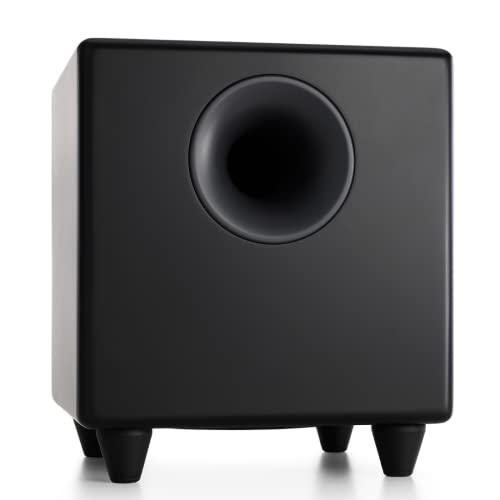
- 8-inch down-firing powered subwoofer
- 250W output with sleep mode
- Compact 11.26-inch square footprint
Best For: Compact studios and desktop audio systems
Professional Low-End Extension
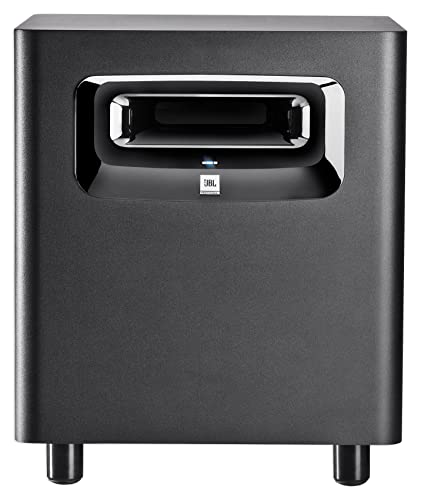
- 10-inch driver reaches into the 20Hz region
- Balanced XLR and 1/4-inch TRS connections
- Selectable XLF club-style tuning
Best For: Professional balanced studio-monitor systems
Flexible Compact Placement
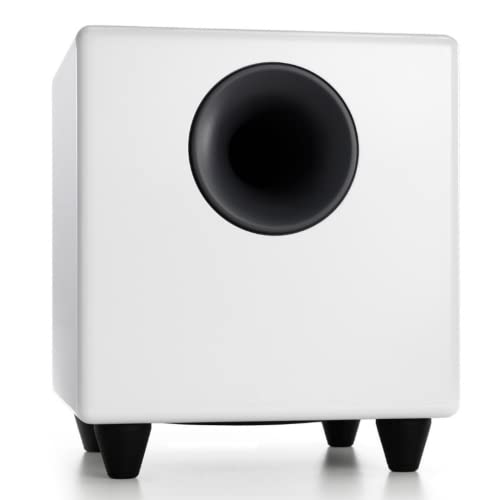
- 8-inch down-firing powered design
- 250W output with RCA and auxiliary connectivity
- Optional 2.4GHz wireless via W3 kit
Best For: Small studios and desktop systems needing flexible placement
Desktop Studio Bass
Mackie CR8SBT 8-Inch Subwoofer

- Made for Mackie CR Series monitors
- TRS, RCA, and Bluetooth connectivity
- Desktop remote and adjustable crossover
Best For: CR Series monitor users needing convenient low-end control
Compact Low-End Detail
Edifier T5s 8-Inch Powered Subwoofer
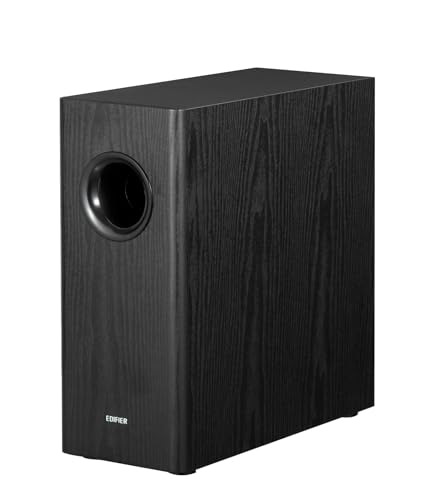
- 35Hz response and 70W RMS output
- Adjustable filter and phase controls
- Slim cabinet with RCA connectivity
Best For: Small studio setups using RCA-equipped speakers
Room-Filling Bass Value
Polk Audio PSW10 10-Inch Subwoofer
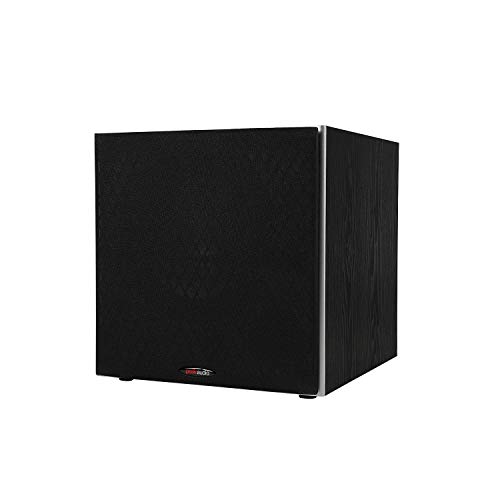
- 10-inch woofer for added bass impact
- Line-level and speaker-level inputs
- Variable crossover and phase toggle
Best For: Small-to-mid-sized rooms with wired audio systems
Best Compact Studio Subwoofer

- 8-inch driver reaches down to 30 Hz
- Adjustable crossover and room-tuning controls
- Bluetooth 5.0 plus TRS, RCA, and aux inputs
Best For: Compact home studios and flexible monitoring setups
Best High-Output Option

- 10-inch woofer with 300W RMS output
- Adjustable volume, crossover, and phase controls
- RCA and high-level wired connections
Best For: Larger hybrid studio, theater, music, and gaming setups
Best Simple 8-Inch Subwoofer

- 8-inch woofer with response down to 28 Hz
- Twisted flare port supports tight bass
- Compact cabinet with two-year warranty
Best For: Compact studios and music-listening systems needing simple bass extension
Balanced Studio Control – Yamaha HS8S
The Yamaha HS8S is a practical choice among subwoofers for home studios when you want an 8-inch design with dedicated crossover and phase controls. Its 150-watt amplifier and stated 22Hz–150Hz frequency response can help extend the low end of a compatible monitor setup.
Best For: Home-studio recording and live-music setups using wired XLR connections.
Pros:
- 8-inch bass-reflex powered subwoofer with a 150-watt amplifier
- LOW CUT switch and adjustable LOW CUT control from 80Hz to 120Hz
- Adjustable HIGH CUT control and phase switch support system integration
- XLR connectivity and floor-standing cabinet design
Cons:
- Wired operation does not provide the convenience of wireless placement
- At 33.6 pounds, it is less portable than compact alternatives
- Controls require manual adjustment for room and monitor matching
The HS8S stands out for hands-on integration features rather than portability. It is a solid fit for creators who want control over crossover behavior and phase when building a focused studio monitoring system.
Compact High-Output Bass – Audioengine S8 250W
The Audioengine S8 is a compact option among subwoofers for home studios, combining an 8-inch down-firing driver with a stated 250-watt output. Its small footprint and sleep mode make it useful when you need added bass without dedicating much floor space.
Best For: Compact home studios, desktop systems, and mixed music or home-theater use.
Pros:
- 250-watt powered output in an 8-inch subwoofer
- Down-firing design helps produce deep bass from a compact enclosure
- Small 11.26-inch square footprint supports flexible placement
- Sleep mode powers the unit down when not in use
Cons:
- Supplied connectivity is wired through RCA
- No dedicated crossover or phase controls are listed in the supplied details
- Wireless operation requires the separate W3 adapter kit
The S8 prioritizes convenience and compact positioning over extensive studio calibration controls. It is a sensible pick for smaller workspaces where a straightforward powered subwoofer is more important than advanced integration features.
Professional Low-End Extension – JBL LSR310S 10-Inch
The JBL LSR310S is a strong contender among subwoofers for home studios when balanced studio connections and extended low-frequency output matter. Its 10-inch driver reaches into the 20Hz region, while XLR and TRS connectivity supports integration with professional monitor systems.
Best For: Home-studio producers working with professional balanced equipment, especially bass-heavy material.
Pros:
- 10-inch custom-designed driver with response into the 20Hz region
- Patented double-flared port is designed to optimize low-frequency extension
- Balanced XLR and 1/4-inch TRS inputs plus XLR outputs
- XLF setting provides an alternative club-style bass tuning
Cons:
- Larger 10-inch format may require more placement space than an 8-inch model
- Its XLF tuning may not suit neutral monitoring for every task
- Wired connectivity limits placement flexibility
The LSR310S is geared toward users who need professional signal connections and substantial low-end headroom. Its XLF option is particularly useful for checking how dance-oriented mixes translate to a more pronounced bass environment.
Flexible Compact Placement – Audioengine S8 White
This white Audioengine S8 offers the same compact, 8-inch down-firing approach that makes it appealing among subwoofers for home studios. With 250 watts of stated output, RCA and auxiliary connectivity, and optional W3 wireless support, it can add bass without overwhelming a small workspace.
Best For: Small studios and desktop systems where compact size and optional wireless placement are priorities.
Pros:
- 250-watt powered output with an 8-inch driver
- Down-firing design and compact 11.26-inch square dimensions
- Supports optional 2.4GHz wireless operation through the W3 kit
- White finish provides an alternative to the typical black cabinet
Cons:
- Wireless functionality requires a separately purchased W3 kit
- No listed adjustable crossover or phase controls
- Its stated 27Hz response is less extended on paper than the JBL’s listed low end
This version is best viewed as a compact placement solution with optional wireless expansion. Choose it when the white finish suits your room and you want straightforward bass enhancement for a desktop or small studio setup.
Desktop Studio Bass – Mackie CR8SBT 8-Inch Subwoofer
The Mackie CR8SBT is a practical choice for home studios using CR Series monitors. Its 8-inch driver, adjustable crossover, and 200-watt maximum output add low-end weight while giving you convenient desktop control.
Best For: CR Series monitor users who want easy desktop volume and subwoofer bypass control.
Pros:
- Designed specifically for Mackie CR Series monitors.
- Connects through TRS or RCA and includes Bluetooth input.
- Adjustable crossover helps blend the subwoofer with your monitors.
- Included desktop remote puts volume and subwoofer bypass within reach.
Cons:
- Its 32.4-pound, floor-standing cabinet takes up substantial space.
- Bluetooth may be less suitable than wired connections for critical studio monitoring.
- It is not waterproof.
For home studios built around CR monitors, the CR8SBT offers straightforward integration and useful control options. It is especially appealing when you want more bass without reaching behind the subwoofer to make adjustments.
Compact Low-End Detail – Edifier T5s 8-Inch Powered Subwoofer
The Edifier T5s is a compact powered option for home studios that need deeper bass without adding a large cabinet. It combines an 8-inch long-throw woofer, 70-watt RMS Class-D amplification, and controls for low-pass filtering and phase matching.
Best For: Desktop or bookshelf speaker setups with RCA connectivity and limited floor space.
Pros:
- Reaches a stated 35Hz low-frequency response with an 8-inch woofer.
- Adjustable 30Hz–160Hz low-pass filter and 0°/180° phase selector support system matching.
- Compact 6.69-inch-wide design is suitable for space-conscious setups.
- Auto-standby and included RCA cables simplify everyday use.
Cons:
- Connectivity is RCA only, with no wireless communication.
- The series-connection setup requires the main speaker to have a wired line input.
- Its 70-watt RMS output is lower than some larger powered subwoofers.
The T5s is a flexible pick for home studios using active speakers or an amplifier with RCA connections. Its filter and phase controls are useful for integration, while the slim cabinet helps preserve valuable workspace.
Room-Filling Bass Value – Polk Audio PSW10 10-Inch Subwoofer
The Polk Audio PSW10 adds a larger 10-inch driver to home studios and small-to-mid-sized listening rooms. Its built-in 50-watt RMS amplifier, 80Hz–160Hz variable crossover, and multiple connection options make it adaptable to existing wired systems.
Best For: Home studio or home audio users who want a compact 10-inch subwoofer with speaker- and line-level inputs.
Pros:
- 10-inch Dynamic Balance woofer delivers more driver area than the smaller models here.
- Provides up to 100 watts of stated power with a built-in 50-watt RMS amplifier.
- Supports both line-level and speaker-level connections.
- Variable crossover and phase toggle help with system integration.
Cons:
- Its 17-inch depth may be challenging in a compact desktop studio.
- Connectivity is wired, with no Bluetooth option listed.
- The supplied frequency-response detail is less specific than the T5s listing.
The PSW10 is a sensible choice when your setup benefits from a larger woofer and broad wired compatibility. It is better suited to a dedicated floor position than a tight desktop, but its crossover and input options make upgrading an existing system straightforward.
Best Compact Studio Subwoofer – PreSonus Eris Sub 8BT
For home studios that need deeper, more controlled bass without taking over the room, the PreSonus Eris Sub 8BT is a practical choice. Its 8-inch driver reaches down to 30 Hz, while adjustable crossover and room-tuning controls help integrate it with your main monitors.
Best For: Compact home studios, music production, hi-fi listening, and multimedia setups that benefit from Bluetooth and flexible wired connections.
Pros:
- 8-inch driver delivers low-frequency extension down to 30 Hz.
- Highpass and lowpass controls help prevent muddy bass overlap.
- Offers Bluetooth 5.0, balanced TRS, RCA, and front-panel aux connectivity.
- Front headphone output and automatic power-saving mode add convenience.
Cons:
- Its compact design is primarily suited to smaller monitoring setups.
- Bluetooth range is listed at up to 10 meters, so placement still matters.
With accurate low-end emphasis, useful tuning controls, and broad connectivity, the Eris Sub 8BT is one of the more studio-focused options here. It is especially appealing when you want a subwoofer that can serve both production and everyday listening.
Best High-Output Option – Rockville Rock Shaker 10
The Rockville Rock Shaker 10 is a large, wired subwoofer for listeners who want pronounced low-end impact in a home studio, theater, music, or gaming setup. Its 10-inch woofer is paired with a built-in Class-D amplifier rated at 300W RMS and 600W peak.
Best For: Home studios that also handle movies, gaming, or home theater and need strong, adjustable bass output.
Pros:
- 10-inch woofer provides substantial low-frequency presence.
- 300W RMS and 600W peak ratings support powerful playback.
- Volume, crossover, and phase controls enable setup customization.
- RCA and high-level inputs and outputs support varied wired systems.
Cons:
- Its larger cabinet may be excessive for a small desktop studio.
- It has no wireless communication technology.
- The supplied frequency-response detail is listed at 200 Hz, which may require careful crossover setup.
The Rock Shaker 10 prioritizes physical impact and connection flexibility over compactness. It makes the most sense when your home studio doubles as a broader entertainment space and you have room for a sizable floor-standing enclosure.
Best Simple 8-Inch Subwoofer – Yamaha NS-SW050BL
The Yamaha NS-SW050BL is a straightforward 8-inch powered subwoofer for adding deeper bass to a home studio, desktop, music-player, or home-theater system. Yamaha’s Advanced YST II technology and twisted flare port are designed to produce clear, tight bass, with a listed frequency response down to 28 Hz.
Best For: Home studios and music-listening systems that want a compact, uncomplicated subwoofer with strong low-frequency extension.
Pros:
- 8-inch woofer reaches down to a listed 28 Hz.
- Twisted flare port is designed to support clear, tight bass.
- Compact 12-by-14-by-12-inch enclosure fits many rooms.
- Includes a two-year manufacturer warranty.
Cons:
- Connectivity is described as wired, with fewer studio-specific controls than the PreSonus.
- The supplied notes do not list adjustable crossover or phase controls.
- Its 100W output is less powerful than the Rockville’s rating.
The NS-SW050BL is a sensible fit when you want Yamaha’s compact cabinet and bass-focused design without a long list of setup features. For more precise monitor integration, buyers may prefer a model with dedicated crossover and room-tuning controls.
How We Picked the Best Subwoofers for Home Studios
We focused on powered subwoofers that suit music production, editing, mixing, or serious listening in a home environment. The selection includes studio-focused models from Yamaha, JBL, Mackie, and PreSonus, alongside versatile consumer options from Audioengine, Edifier, Polk Audio, Rockville, and Yamaha’s home-audio line.
Our comparison emphasizes driver size, amplifier power, stated bass extension, connection options, placement flexibility, and compatibility with existing monitors. Because specifications are not always measured under identical conditions, treat frequency-response figures as useful reference points rather than direct performance rankings.
Quick Comparison
| Best For | Recommended Type | What to Prioritize |
|---|---|---|
| Mixing and monitoring | Studio subwoofer | Balanced response, crossover controls, and monitor integration |
| Small desktop rooms | Compact 8-inch model | Low noise, manageable output, and flexible placement |
| Large or bass-heavy rooms | 10-inch powered subwoofer | Headroom, room control, and clean high-volume output |
| Streaming and casual listening | Bluetooth or wireless-ready model | Convenient inputs, remote control, and easy setup |
Key Buying Factors for Subwoofers for Home Studios
Size and Output
An 8-inch driver is often a practical starting point for bedrooms, offices, and compact control rooms. A 10-inch design can deliver greater low-end authority, but it may excite room modes more strongly. More amplifier power provides headroom; it does not automatically guarantee tighter or more accurate bass.
Integration and Crossover Control
For production, look for stereo inputs and outputs, an adjustable crossover, phase control, and a level control. These features help blend the sub with your main monitors instead of creating an obvious bass hump. A bypass or footswitch connection can also make it easier to check mixes with the sub engaged and disengaged.
Connectivity
Confirm that the inputs match your interface, monitor controller, or receiver. Professional models commonly use balanced connections, while consumer models may rely on RCA, speaker-level, or Bluetooth inputs. Wireless-ready features can simplify placement, but wired connections remain the safer choice for critical monitoring.
Room Placement and Treatment
Low frequencies interact heavily with walls and corners. Start with the sub near the front wall, keep it centered when possible, and use measurement software or familiar reference tracks to adjust placement and level. Bass traps and basic acoustic treatment can improve results more than simply buying a larger subwoofer.
Who Should Buy Which Subwoofers for Home Studios?
Choose a professional studio subwoofer if you are mixing, mastering, or building around nearfield monitors and need predictable integration. An 8-inch desktop model is generally the better fit for a small room or workstation, while a 10-inch unit makes more sense when you need extra headroom and have space to manage its output.
For music listening, movies, and flexible everyday use, prioritize convenience features such as Bluetooth, a remote, or wireless-ready operation. If accuracy is the priority, select the model with the most useful crossover and connection controls, then calibrate it conservatively. A well-integrated subwoofer should extend the system—not dominate it.