
Finding the best subwoofers for small rooms means balancing deep, enjoyable bass with a compact footprint and controlled output. The right model can add impact to movies, music, and games without overwhelming a nearby sofa, desk, or apartment wall.
This roundup includes powered and passive subwoofers, desktop-friendly options, and soundbar systems with wireless bass. Use the guide below to narrow the choices by room size, system type, placement, and listening habits.
Best 10 Subwoofers for Small Rooms Picks for 2026
Compact Bass Upgrade
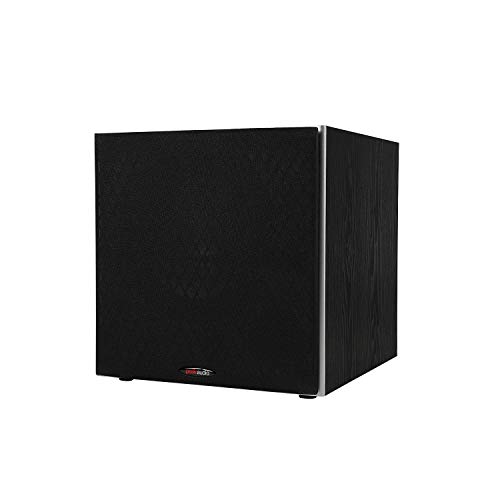
- 10-inch woofer with directed port
- Up to 100 watts of built-in power
- Flexible crossover and wired inputs
Best For: Small-to-mid-size home theaters needing an easy bass upgrade
All-in-One Surround Pick

- 5.1-channel Dolby Atmos soundbar system
- Dedicated 5.25-inch wired subwoofer
- App EQ, HDMI eARC, and Bluetooth 5.4
Best For: Small rooms needing simple surround sound and stronger dialogue
High-Output Choice

- 12-inch spun-copper woofer
- 200-watt amplifier with 400-watt maximum output
- Rear-firing bass-reflex port
Best For: Small rooms with space for a larger, powerful home theater subwoofer
Space-Saving Starter
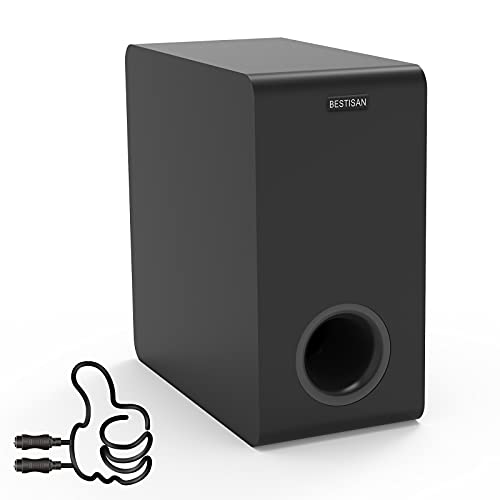
- Compact 6.5-inch powered subwoofer
- Side-firing design for room-filling audio
- RCA setup with bass and volume controls
Best For: Small TV, home theater, or bookshelf-speaker systems
Compact Deep-Bass Pick
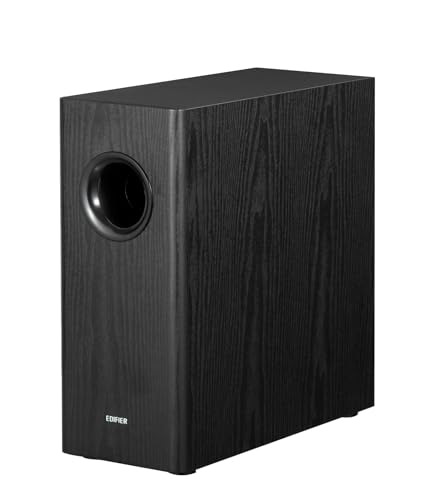
- 8-inch woofer with 70W RMS output and 35Hz bass
- Adjustable crossover and phase controls
- Compact powered design with included RCA cables
Best For: RCA-connected bookshelf speakers and home audio systems in smaller rooms
Wireless Soundbar Solution

- 2.1-channel soundbar with wireless subwoofer
- 240W peak output and BassMX deep-bass technology
- App EQ plus HDMI ARC, optical, and Bluetooth 6.0
Best For: Compact TV, gaming, and streaming setups with flexible subwoofer placement
Studio-Controlled Bass Pick

- 8-inch driver reaches down to 30Hz
- High-pass and low-pass filters for monitor integration
- Bluetooth 5.0 plus balanced, RCA, and aux inputs
Best For: Desktop studios, music production, and flexible hi-fi listening
Compact Power Pick
Rock Shaker 6.5-Inch Powered Subwoofer

- 100W RMS powered bass in a compact cabinet
- Adjustable crossover and phase controls
- RCA and speaker-level connections
Best For: Small-room home theater systems needing flexible setup
Easy-Tuning Choice
LITTOAK 6.5-Inch DSP Powered Subwoofer

- DSP, low-pass dial, and phase switch
- Compact down-firing MDF cabinet
- Includes RCA-to-3.5mm cable
Best For: Small spaces needing simple powered bass integration
Passive Setup Option
Audio Fantasy SUB65 6.5-Inch Subwoofer

- 100W RMS, 150W peak passive bass
- Down-firing woofer with anti-shock base
- Compact MDF cabinet for smaller setups
Best For: Existing amplifier or receiver-based home theater systems
Compact Bass Upgrade – Polk Audio PSW10
The Polk Audio PSW10 is a practical choice for shoppers comparing subwoofers for small rooms. Its 10-inch woofer, 50-watt RMS amplifier, and compact floor-standing design add bass depth to music and movies without requiring a large setup.
Best For: Small-to-mid-size home theaters and listeners who want an easy wired bass upgrade.
Pros:
- 10-inch Dynamic Balance woofer and directed port deliver added bass depth.
- Built-in amplifier provides up to 100 watts of power.
- Variable 80–160 Hz crossover, phase switch, and multiple input options support flexible integration.
Cons:
- Wired connectivity requires a receiver or compatible audio system.
- Its 17-inch depth may still require careful placement in very tight spaces.
With straightforward controls and a useful range of connection options, the PSW10 is a sensible, room-friendly starting point for adding more impact to a compact home audio system.
All-in-One Surround Pick – ULTIMEA Poseidon M60
The ULTIMEA Poseidon M60 combines a 5.1-channel Dolby Atmos soundbar system with a dedicated wired subwoofer, making it a convenient option among subwoofers for small rooms. Its built-in side-firing drivers create wider sound without requiring rear speakers.
Best For: Compact living rooms or gaming spaces where simplified surround sound and enhanced dialogue are priorities.
Pros:
- Five built-in speakers and Dolby Atmos provide an immersive surround-oriented setup.
- Dedicated 5.25-inch wired subwoofer and 300-watt peak output add cinematic impact.
- HDMI eARC, app EQ controls, Bluetooth 5.4, and voice enhancement offer flexible operation.
Cons:
- The subwoofer is wired rather than wireless.
- This is a complete soundbar system, not a standalone subwoofer for an existing receiver.
The Poseidon M60 makes sense when space and setup simplicity matter more than building a component-based system. Its app adjustments can also help tailor the sound to a smaller room.
High-Output Choice – Klipsch R-120SW
The Klipsch R-120SW delivers substantially more driver area and output than many compact models considered for subwoofers for small rooms. Its 12-inch spun-copper woofer, rear-firing port, and 200-watt amplifier are designed for powerful home entertainment bass.
Best For: Listeners with enough floor space for a larger subwoofer who want high-output movie and music bass.
Pros:
- 12-inch high-excursion woofer supports deep, forceful bass.
- 200 watts of amplifier power and 400 watts maximum acoustic output provide substantial headroom.
- Rear-firing bass-reflex port and RCA connectivity suit traditional home theater setups.
Cons:
- Its 19.2-inch depth and 31-pound weight make it less space-friendly than compact alternatives.
- Wired RCA connectivity limits placement flexibility.
The R-120SW can work in a small room if carefully positioned, but its larger cabinet is best suited to buyers who prioritize output over the smallest possible footprint.
Space-Saving Starter – Bestisan SW65D
The Bestisan SW65D is a compact 6.5-inch powered subwoofer for shoppers seeking subwoofers for small rooms without a bulky cabinet. Its side-firing design, simple RCA connection, and adjustable bass and volume controls make it easy to position and tune.
Best For: Small home theater, television, or bookshelf-speaker systems needing a modest wired bass boost.
Pros:
- Compact 6.3-by-12.6-by-12.6-inch enclosure fits more easily into limited spaces.
- Side-firing speaker design is intended to help distribute sound through the room.
- Simple RCA setup and adjustable bass and volume controls support easy integration.
Cons:
- Its 60-watt maximum output is lower than the larger models in this group.
- Only a 6.5-inch woofer is provided, so it may not deliver the same impact as a 10- or 12-inch subwoofer.
The SW65D is a practical fit when cabinet size and setup simplicity are the main concerns. It is better suited to moderate bass enhancement than to filling a room with very high-output effects.
Compact Deep-Bass Pick – Edifier T5s
For subwoofers for small rooms, the Edifier T5s offers a space-conscious way to add substantial low end without requiring an external amplifier. Its front-firing 8-inch woofer, 70W RMS Class-D amplification, and adjustable controls make it practical for home audio, home theater, and compatible bookshelf speakers.
Best For: Small-room home audio setups using RCA-connected speakers, amplifiers, or compatible Edifier models.
Pros:
- Compact cabinet with an 8-inch woofer and 35Hz frequency response.
- Adjustable 30Hz–160Hz low-pass filter and 0°/180° phase selector.
- Built-in amplifier, auto-standby, and included 3.5mm-to-RCA and RCA cables.
- Front-firing driver and acoustic port help support clean, tight bass.
Cons:
- Wired RCA connectivity only; it has no wireless communication.
- Series connection requires main speakers with a LINE IN and does not support Bluetooth, USB, or optical connections in that setup.
- Its 15.71-inch depth may require careful placement in a very compact room.
The T5s is a strong choice when you want adjustable, powered bass in a relatively narrow enclosure. Check your speakers or amplifier for compatible RCA connections before buying.
Wireless Soundbar Solution – ULTIMEA Poseidon M30
If you want subwoofers for small rooms without running an audio cable across the floor, the ULTIMEA Poseidon M30 combines a soundbar with a wireless subwoofer. Its 2.1-channel design, app-based EQ, and HDMI ARC, optical, and Bluetooth 6.0 connectivity create a straightforward setup for television, gaming, and everyday streaming.
Best For: Small living rooms or bedrooms needing a simple TV and gaming audio upgrade with flexible subwoofer placement.
Pros:
- Wireless subwoofer allows more flexible placement without an audio cable to the soundbar.
- 240W peak 2.1-channel system with BassMX technology and a 45Hz frequency response.
- App offers a 10-band equalizer and 121 preset EQ matrices.
- Supports HDMI ARC, optical, and Bluetooth 6.0 connections.
Cons:
- This is a complete soundbar system rather than a standalone subwoofer for an existing stereo setup.
- Its listed 45Hz low-frequency response may not reach as deeply as some dedicated 8-inch subwoofers.
- Wireless operation still requires the subwoofer and soundbar to use their respective power adapters.
The Poseidon M30 makes the most sense when convenience and clean installation matter more than integrating with a traditional receiver. Its wireless subwoofer and app control are particularly useful where floor space and cable routing are limited.
Studio-Controlled Bass Pick – PreSonus Eris Sub 8BT
For desktop listeners and creators comparing subwoofers for small rooms, the PreSonus Eris Sub 8BT adds controlled low end while retaining useful studio-style adjustment. Its front-firing 8-inch driver reaches 30Hz, and high-pass and low-pass controls help integrate it with compact monitors or other connected sources.
Best For: Desktop music production, hi-fi listening, and multimedia setups that need flexible wired or Bluetooth input.
Pros:
- 8-inch front-firing driver delivers low frequencies down to 30Hz.
- High-pass and low-pass filters support more precise monitor integration.
- Bluetooth 5.0, balanced ¼-inch TRS, RCA, and front-panel aux connections.
- Front headphone output, headphone amplifier, room-tuning controls, and power-saving mode.
Cons:
- Its studio-focused controls and connections may be more than a basic TV setup needs.
- Bluetooth range is listed at 10 meters, so placement remains subject to room layout.
- It is a floor-standing subwoofer, which may need dedicated space beside or beneath a desk.
The Eris Sub 8BT is a versatile choice for a small-room desktop system when accurate bass adjustment and connection flexibility are priorities. It is especially well suited to users who alternate between monitors, consumer audio sources, and headphones.
Compact Power Pick – Rock Shaker 6.5-Inch Powered Subwoofer
For shoppers comparing subwoofers for small rooms, the Rockville Rock Shaker combines a compact cabinet with 100 watts RMS of powered bass. Its 6.5-inch woofer, adjustable crossover, and phase control make it practical for movies, music, and gaming without requiring a separate amplifier.
Best For: Small-room home theater setups that need flexible wired connectivity and adjustable bass integration.
Pros:
- Powered 6.5-inch woofer delivers 100W RMS and 200W peak output.
- Adjustable crossover and phase controls help match the subwoofer to existing speakers.
- RCA and speaker-level inputs and outputs support varied audio systems.
- Compact MDF cabinet measures approximately 11 x 11.8 x 12.6 inches according to the product notes.
Cons:
- Wired connectivity means it is not a wireless placement solution.
- The 4-ohm impedance may require attention when matching it with an amplifier or receiver.
The Rock Shaker is a sensible choice when you want a self-powered subwoofer with useful tuning controls in a relatively compact enclosure. Confirm your system’s connection and impedance requirements before buying.
Easy-Tuning Choice – LITTOAK 6.5-Inch DSP Powered Subwoofer
The LITTOAK BS02 is one of the more space-conscious subwoofers for small rooms, using a down-firing 6.5-inch woofer and Class-D amplification in a compact MDF cabinet. DSP, a low-pass dial, and a phase switch provide practical control over how its bass blends with your system.
Best For: Small living rooms, desks, or entertainment centers where compact placement and simple wired connections matter.
Pros:
- DSP and Class-D amplification provide 60W RMS and 100W peak power.
- 40Hz-250Hz response, adjustable low-pass control, and 0-180-degree phase switching support system matching.
- Down-firing woofer and MDF enclosure are designed for compact, low-distortion operation.
- Includes an RCA-to-3.5mm cable, power cord, and 12-month warranty with lifetime US-based support.
Cons:
- Supports wired outputs only; Bluetooth, USB, optical, and other non-wired outputs are not compatible.
- Its 100-watt peak output is intended for compact setups rather than high-output applications.
With its small footprint and included cable, the BS02 is convenient for buyers who want a straightforward powered upgrade. Check whether your source provides an LFE, subwoofer, AUX, or line output before ordering.
Passive Setup Option – Audio Fantasy SUB65 6.5-Inch Subwoofer
The Audio Fantasy SUB65 offers a compact alternative among subwoofers for small rooms, but it is a passive model and cannot operate by itself. Its 6.5-inch down-firing woofer is rated at 100 watts RMS, while the MDF cabinet and anti-shock base are designed to support stable, resonant bass when paired with a suitable amplifier or receiver.
Best For: Buyers who already have a compatible amplifier or receiver and want a compact wired subwoofer for a home theater or studio setup.
Pros:
- 6.5-inch woofer delivers 100W RMS and 150W peak power.
- Down-firing design and 40mm anti-shock base support stable placement and ground-reflected bass.
- High-density MDF cabinet is intended to reduce acoustic resonance.
- Compact dimensions of approximately 8.6 x 8.6 x 13.1 inches suit smaller setups.
Cons:
- Requires a separate amplifier or receiver and cannot be used alone.
- Uses standard wired speaker connections, so setup depends on the available amplifier output and cables.
- The supplied frequency-response detail lists 200Hz, which may warrant checking system compatibility before purchase.
The SUB65 makes the most sense for shoppers building around an existing amplifier and prioritizing a small cabinet. It is not the right choice if you need a plug-and-play powered subwoofer.
How We Picked the Best Subwoofers for Small Rooms
We focused on models that make sense in compact living rooms, bedrooms, offices, and apartments. Selection criteria included cabinet size, amplifier output, woofer diameter, stated frequency response, connection options, and setup flexibility. We also considered whether each product is best suited to a traditional home-theater receiver, a soundbar, a desktop system, or a powered speaker setup.
Because specifications vary by manufacturer, wattage and bass-extension claims should be treated as useful comparisons rather than guarantees of room performance. Placement, room acoustics, and crossover settings can have an equally large effect.
Quick Comparison
| Best For | Recommended Type | What to Prioritize |
|---|---|---|
| Compact home theater | Powered 6.5- to 10-inch subwoofer | Adjustable level, phase, and line-level compatibility |
| Soundbar systems | Matched wireless subwoofer package | Simple pairing and soundbar compatibility |
| Desktop music and gaming | Small powered studio subwoofer | Low-noise operation and flexible inputs |
| Receiver-based systems | Powered or passive subwoofer | Amplification and connection requirements |
Key Buying Factors for Subwoofers for Small Rooms
Size and Output
A 6.5- or 8-inch woofer is often easier to place and control in a compact room, while a 10-inch model can deliver more cinematic impact. More power is not automatically better: excessive output may create boomy, uneven bass before it produces useful detail.
Powered Versus Passive Design
Powered subwoofers include their own amplifier and are usually the simplest choice. Passive models require a compatible external amplifier or receiver, so confirm the available power and impedance before buying. A passive subwoofer is not a drop-in replacement for a powered one.
Connections and Compatibility
Check whether your source provides an RCA subwoofer output, speaker-level connection, Bluetooth, or a proprietary wireless link. Soundbar subwoofers are commonly designed to pair only with their matching soundbar, whereas conventional powered models offer broader system compatibility.
Placement and Adjustment
Look for phase and volume controls, and use the crossover setting to blend the subwoofer with your main speakers. Start near the front wall, avoid placing it directly in a corner, and move it in small increments until bass sounds even from the main listening position.
Who Should Buy Which Subwoofers for Small Rooms?
Choose a compact powered model if you want straightforward integration with a receiver, powered speakers, or a simple stereo system. Pick a matched soundbar package if convenience, dialogue enhancement, and minimal cabling matter most. Desktop listeners should favor a smaller studio-oriented subwoofer with appropriate inputs and restrained output.
Consider a larger 10-inch option when you watch action movies or listen at higher levels and have enough space for careful placement. Choose a passive unit only when you already own suitable amplification and are comfortable configuring the system. For apartments or shared walls, prioritize adjustable output and smooth integration over maximum volume.