
Clear, intelligible church audio depends on more than powerful speakers. The right equalizer can shape vocals, balance music, reduce harsh frequencies, and help a sound team manage feedback in a busy worship space.
This roundup compares 10 equalizer and audio-processing options, from compact home-style units to rack-mount graphic EQs and dedicated feedback suppressors. Use the buying guide below to match features with your sanctuary, mixer, speaker system, and volunteer team.
Best 10 Audio Equalizers for Church Sound Systems Picks for 2026
High-Capacity Church EQ
TKL T2531 31-Band Graphic Equalizer

- Dual-channel 31-band DSP control
- Stores 10 effects and includes noise reduction
- 2U rack design with LED status display
Best For: Churches needing detailed, rack-based EQ control
Compact Stereo EQ
Douk Audio T7 7-Band Balanced Preamp

- Seven bands with ±6dB adjustment
- XLR and RCA input/output connectivity
- Compact design with low specified distortion
Best For: Smaller stereo systems needing simple tone adjustment
Feedback Control Specialist
6-In 6-Out Anti-Howling Processor

- Automatically detects and suppresses feedback
- Smart auto mode simplifies operation
- Six inputs and six outputs for flexible routing
Best For: Church PA systems where microphone feedback is the main issue
Visual Mixing Companion
FX-888 Dual-Channel 31-Band EQ

- Dual-channel 31-band DSP processing
- Real-time LED spectrum display
- XLR, RCA, and TRS connectivity with presets
Best For: Church teams needing visual EQ control and flexible integration
Feature-Rich Pick

- Dual-channel 15-band EQ
- Bluetooth, USB, RCA, and 3.5 mm connectivity
- Built-in microphone and spectrum display
Best For: Multipurpose church audio setups needing flexible playback
Installation-Ready Pick
EQ-215 15-Band Stereo Equalizer
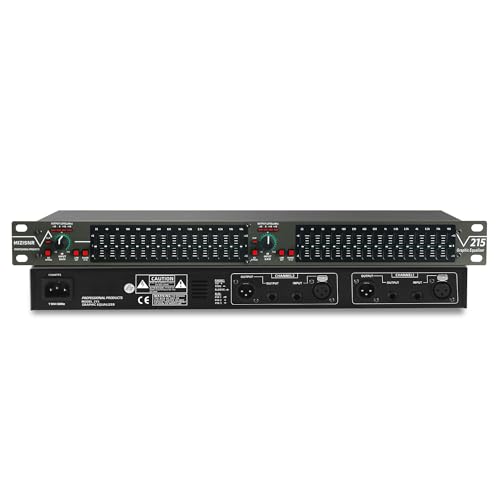
- Dual-channel 15-band EQ
- Low-cut filter and bypass switch
- 1U rack mount with XLR and TRS I/O
Best For: Church sound racks and professional live installations
Detailed Tuning Pick

- 31-band precise frequency control
- Spectrum analyzer with 12 customizable modes
- Optical, coaxial, USB, and Bluetooth connectivity
Best For: Detailed vocal and live-event sound shaping
Reliable Room-Tuning Control
Dual 15-Band Graphic Equalizer

- Dual 15-band control for vocals and room tuning
- 40Hz low-cut filter and instant bypass
- XLR/TRS I/O with LED level monitoring
Best For: Church PA systems and live worship sound racks
Feature-Rich Digital Flexibility

- 31-band DSP control with spectrum display
- Ten presets and intelligent noise reduction
- Bluetooth, USB, and adjustable subwoofer output
Best For: Flexible church systems needing presets and detailed EQ
Flexible Low-End Shaping
Stereo 15-Band EQ with Bass Output

- Dual 15-band control with ±12dB adjustment
- Adjustable low-cut frequency for cleaner sound
- Dedicated bass output and included connection cables
Best For: Church racks needing subwoofer and low-end control
High-Capacity Church EQ – TKL T2531 31-Band Graphic Equalizer
For churches comparing audio equalizers for church sound systems, the TKL T2531 offers extensive hands-on control through dual-channel, 31-band DSP processing. Its rack-ready 2U design, noise reduction, and effect storage make it suited to larger or more involved sound setups.
Best For: Churches, KTV venues, and stage systems needing detailed dual-channel EQ control.
Pros:
- Dual-channel synchronized 31-band DSP equalization
- Stores and recalls up to 10 effects
- Includes automatic noise reduction and LED status indicators
- Separate bass, midrange, and treble adjustment
Cons:
- The 2U rack format requires suitable installation space
- Its feature set may be more extensive than needed for a small church system
The T2531 is a strong choice when precise, multi-band shaping and saved presets matter more than minimal setup. Its rackmount form and broad controls make it better suited to permanent or semi-permanent systems than compact portable rigs.
Compact Stereo EQ – Douk Audio T7 7-Band Balanced Preamp
Among audio equalizers for church sound systems, the Douk Audio T7 is a compact option for setups that need straightforward stereo tone shaping. Its seven frequency bands, balanced XLR connectivity, and RCA connections offer flexibility for compatible amplifiers and audio sources.
Best For: Smaller church, home, or auxiliary stereo systems needing simple seven-band adjustment.
Pros:
- Seven adjustable frequency bands from 64Hz to 8kHz
- Provides both XLR and RCA inputs and outputs
- Specified 104dB-plus signal-to-noise ratio and low distortion
- Compact aluminum alloy enclosure
Cons:
- It has no volume control knob
- Seven bands provide less control than a 31-band graphic equalizer
- Its plug-and-play design is intended to output at a rated level
The T7 makes sense when a church needs modest EQ correction without a large rack processor. Confirm that the system can accommodate its fixed-level output and that seven bands provide enough control for the room and speakers.
Feedback Control Specialist – 6-In 6-Out Anti-Howling Processor
Churches evaluating audio equalizers for church sound systems may benefit from a dedicated feedback processor when microphone howling is the main concern. This 6-in, 6-out unit uses automatic feedback detection and DSP processing to help stabilize vocals and other live audio sources.
Best For: Churches, conferences, classrooms, and PA systems where reducing microphone feedback is a priority.
Pros:
- Automatically detects and suppresses feedback frequencies
- Smart auto mode reduces the need for manual adjustment
- 6-in, 6-out design supports flexible audio routing
- Designed for microphones, mixers, speakers, amplifiers, and PA systems
Cons:
- It is focused on feedback suppression rather than broad graphic EQ control
- The 18.9-inch chassis may require dedicated rack or installation space
- Automatic processing may offer less hands-on control than manual EQ
This processor is best viewed as a feedback-management tool rather than a replacement for a full graphic equalizer. It is especially practical for churches that need easier live operation and multiple input/output paths.
Visual Mixing Companion – FX-888 Dual-Channel 31-Band EQ
The FX-888 is a versatile choice for churches seeking audio equalizers for church sound systems with detailed visual monitoring. It combines synchronized dual-channel, 31-band DSP control with LED spectrum displays, multiple connection types, and save-and-recall functions.
Best For: Church sound teams and live systems needing precise EQ, visual feedback, and flexible connectivity.
Pros:
- Dual-channel synchronized 31-band processing
- LED spectrum indication provides real-time frequency visibility
- Supports TRS, RCA, and XLR connections
- Save-and-recall function stores multiple modes
Cons:
- The range of controls and connection options may require a learning period
- Computer-control functionality may add setup complexity
- Software update support is listed as unknown
The FX-888 stands out for operators who value visual information and repeatable presets. Its broad connectivity can help integrate it into varied church audio chains, provided the team is comfortable with a more feature-rich processor.
Feature-Rich Pick – Decibelvibe TNZ SGE6
The Decibelvibe TNZ SGE6 is a versatile option among audio equalizers for church sound systems when you also need flexible playback and visual feedback. Its dual-channel 15-band EQ, multiple inputs, and preamp functionality can suit smaller or multipurpose audio setups.
Best For: Churches and multipurpose spaces that want EQ control alongside Bluetooth, USB, microphone, and auxiliary connectivity.
Pros:
- Provides 15-band EQ control for two channels.
- Offers rear RCA and 3.5 mm inputs and outputs for broad compatibility.
- Includes Bluetooth 5.0, USB, a built-in microphone, and adjustable spectrum-display settings.
- Can function as an audio amplifier or preamp with adjustable output volume.
Cons:
- Its RCA and 3.5 mm connections may be less suitable for installations centered on balanced professional cabling.
- The display-oriented features may be unnecessary if you only need straightforward signal equalization.
The TNZ SGE6 stands out for churches that value connectivity and visual presentation as much as basic tone shaping. Confirm that its unbalanced connection options fit your existing mixer and amplifier chain.
Installation-Ready Pick – EQ-215 15-Band Stereo Equalizer
The EQ-215 is a practical choice among audio equalizers for church sound systems that use rack-mounted equipment and professional cabling. Its dual-channel 15-band layout, low-cut filter, bypass switch, and 1U rack format focus on hands-on signal shaping for live or installed audio.
Best For: Church sound racks, live applications, and installations using XLR or 1/4-inch TRS connections.
Pros:
- Provides independent 15-band control on each stereo channel.
- Offers adjustable range of up to ±12 dB per band.
- Low-cut filtering helps attenuate wind noise, floor rumble, and electrical hum.
- Includes bypass for troubleshooting and a standard 1U rack-mount design.
Cons:
- It does not list Bluetooth, USB, or other wireless playback features.
- The 15-band design offers less frequency control than a 31-band equalizer.
For churches prioritizing rack compatibility and practical noise control, the EQ-215 is the most installation-focused option in this group. Its balanced XLR support can be especially useful when integrating with professional mixers and amplifiers.
Detailed Tuning Pick – 31-Band Spectrum Equalizer
This 31-band graphic equalizer is a strong candidate among audio equalizers for church sound systems when detailed frequency adjustment and preset management matter. Its spectrum analyzer, customizable modes, noise reduction, and broad device connectivity support applications ranging from vocal reinforcement to live events.
Best For: Churches, concert spaces, and recording environments needing fine-grained tonal adjustment and multiple saved sound profiles.
Pros:
- Provides 31-band tuning with independent band adjustment.
- Includes real-time frequency monitoring through a built-in spectrum analyzer.
- Offers 12 customizable modes with auto-save presets for different uses.
- Supports optical, coaxial, USB, and Bluetooth connectivity according to the supplied notes.
Cons:
- The supplied notes do not specify balanced XLR or 1/4-inch professional inputs and outputs.
- Its extensive modes and connectivity may be more than a simple church audio chain requires.
The 31-band layout gives this model the most detailed adjustment potential of the three, while auto-saving can simplify switching between worship, speech, and event settings. Verify its specific I/O connections before planning a permanent rack installation.
Reliable Room-Tuning Control – Dual 15-Band Graphic Equalizer
For churches seeking practical audio equalizers for church sound systems, this dual-channel 15-band model provides hands-on control for shaping vocals, music, and room acoustics. Its balanced connections, low-cut filter, bypass switch, and rack-ready chassis suit straightforward PA installations and live sound adjustments.
Best For: Church PA systems, live worship services, mobile rigs, and setups needing simple dual-channel EQ control.
Pros:
- Two independent 15-band channels support detailed frequency shaping.
- 40Hz low-cut filter helps reduce rumble, wind noise, and electrical hum.
- XLR and 1/4-inch TRS inputs and outputs integrate with mixers, amplifiers, and PA equipment.
- LED level monitoring, bypass, and switchable ±6dB/±12dB ranges aid live adjustments.
Cons:
- It offers fewer frequency bands than a 31-band equalizer.
- Its analog control layout does not provide digital presets or wireless playback.
This is a sensible choice when the church team wants familiar slider-based control without a complicated feature set. The 1U rackmount format and signal monitoring make it especially practical for permanent or portable sound racks.
Feature-Rich Digital Flexibility – 31-Band Graphic Equalizer
This 31-band unit is one of the more feature-rich audio equalizers for church sound systems, offering detailed DSP adjustment with a real-time spectrum display. Presets, noise reduction, Bluetooth, USB playback, and a dedicated subwoofer output make it suitable for churches that also use their rack for varied music and presentation duties.
Best For: Churches wanting detailed digital EQ control, repeatable presets, and expanded playback and subwoofer connectivity.
Pros:
- 31-band DSP equalization provides granular frequency adjustments.
- Real-time spectrum display helps visualize frequency changes in low-light environments.
- Ten custom presets support quick recall for different services or applications.
- Bluetooth 5.2, USB playback, noise reduction, and adjustable subwoofer output add flexibility.
Cons:
- The broader feature set may be more than a basic church PA requires.
- Bluetooth and USB playback are not necessary for every installed sound system.
- The supplied notes do not specify a warranty.
Choose this model when precise visual adjustment and multiple stored sound modes matter more than a minimal control surface. Its 1U rackmount design and varied I/O can help consolidate functions in a flexible church audio rack.
Flexible Low-End Shaping – Stereo 15-Band EQ with Bass Output
For churches looking for audio equalizers for church sound systems with dedicated bass management, this dual-channel 15-band EQ combines familiar graphic controls with a low-cut feature and adjustable bass output. Its rackmount design and included cables make it a practical option for live events, installations, and studio-style setups.
Best For: Church sound racks needing dual-channel EQ, adjustable low-end control, and flexible XLR/TRS connectivity.
Pros:
- Each channel has 15 adjustable bands with a ±12dB range.
- Low-cut control includes an adjustable frequency knob for reducing unwanted low-end noise.
- Dedicated bass output with adjustable frequency supports controlled subwoofer integration.
- Includes a power cable, XLR cable, and 1/4-inch TRS cable, plus a stated two-year warranty.
Cons:
- It provides less frequency resolution than a 31-band model.
- The supplied notes do not specify a frequency range for the adjustable bass output.
- Its dual-channel design may be unnecessary for smaller mono systems.
This model stands out for churches that want more low-frequency routing flexibility than a basic graphic EQ provides. The adjustable low-cut function, bass output, and included connection cables can simplify setup while retaining conventional front-panel operation.
How We Picked the Best Audio Equalizers for Church Sound Systems
We focused on the features that matter during worship services: usable frequency control, balanced connectivity, dependable signal routing, feedback-management options, rack compatibility, and straightforward operation. The selection includes 15-band and 31-band graphic equalizers, compact stereo units, digital processors, and feedback suppressors because churches have different room sizes, budgets, and technical requirements.
Product descriptions were also checked for practical details such as XLR, RCA, and auxiliary connections, LED displays, noise reduction, Bluetooth or USB playback, and channel configuration. Because specifications and included accessories can vary by seller, verify the current listing before purchase.
Quick Comparison
| Best For | Look For | Typical Choice |
|---|---|---|
| Large sanctuary or installed system | 31 bands, balanced I/O, rack mounting | Professional digital or dual-channel graphic EQ |
| Small church or simple stereo setup | Compact controls and RCA or 3.5mm connections | 7-band or compact stereo equalizer |
| Persistent microphone feedback | Dedicated feedback suppression and multiple inputs/outputs | Feedback eliminator or frequency-shifting processor |
| Music playback and presentation audio | Bluetooth, USB, auxiliary input, and display | Feature-rich home-style graphic EQ |
Key Buying Factors for Audio Equalizers for Church Sound Systems
Band Count and Control
More bands provide finer control over speech clarity and room resonances. A 31-band EQ is useful for tuning individual frequencies in a large room, while a 7-band or 15-band model may be easier for volunteers to operate and sufficient for a modest system.
Connections and Signal Balance
Balanced XLR inputs and outputs are generally preferable for longer cable runs because they help reject electrical noise. RCA and 3.5mm connections can be convenient for consumer audio sources but may be less suitable as the main connection between a mixer and installed amplifiers.
Feedback and Noise Management
An equalizer can reduce feedback by cutting problem frequencies, but it is not a substitute for correct microphone placement, speaker positioning, gain structure, and room tuning. If howling microphones are the main issue, consider a dedicated feedback suppressor with enough inputs and outputs for the system.
Rack Space, Displays, and Workflow
Confirm whether the unit is rack-mountable and whether it requires 1U or 2U of space. LED spectrum displays can make monitoring easier, but simple controls may be more valuable than visual effects when volunteers need fast, predictable adjustments.
Who Should Buy Which Audio Equalizers for Church Sound Systems?
Choose a 31-band rack-mount unit for a larger sanctuary, permanent sound rack, or system that needs detailed room correction. A 15-band model is a practical middle ground for churches that want useful tonal control without a more complex interface. Compact 7-band or Bluetooth-enabled units suit small worship rooms, auxiliary playback, or secondary systems rather than demanding main-system installations.
Buy a dedicated feedback eliminator when microphone howl is the recurring problem, especially for stage events with several inputs. For any option, confirm the number and type of channels, operating level, connectors, power requirements, and return policy before ordering. The best choice is the model that fits your existing signal path and can be operated confidently during a live service.